

Virtual and Augmented Reality and impact of AI on student learning and profession
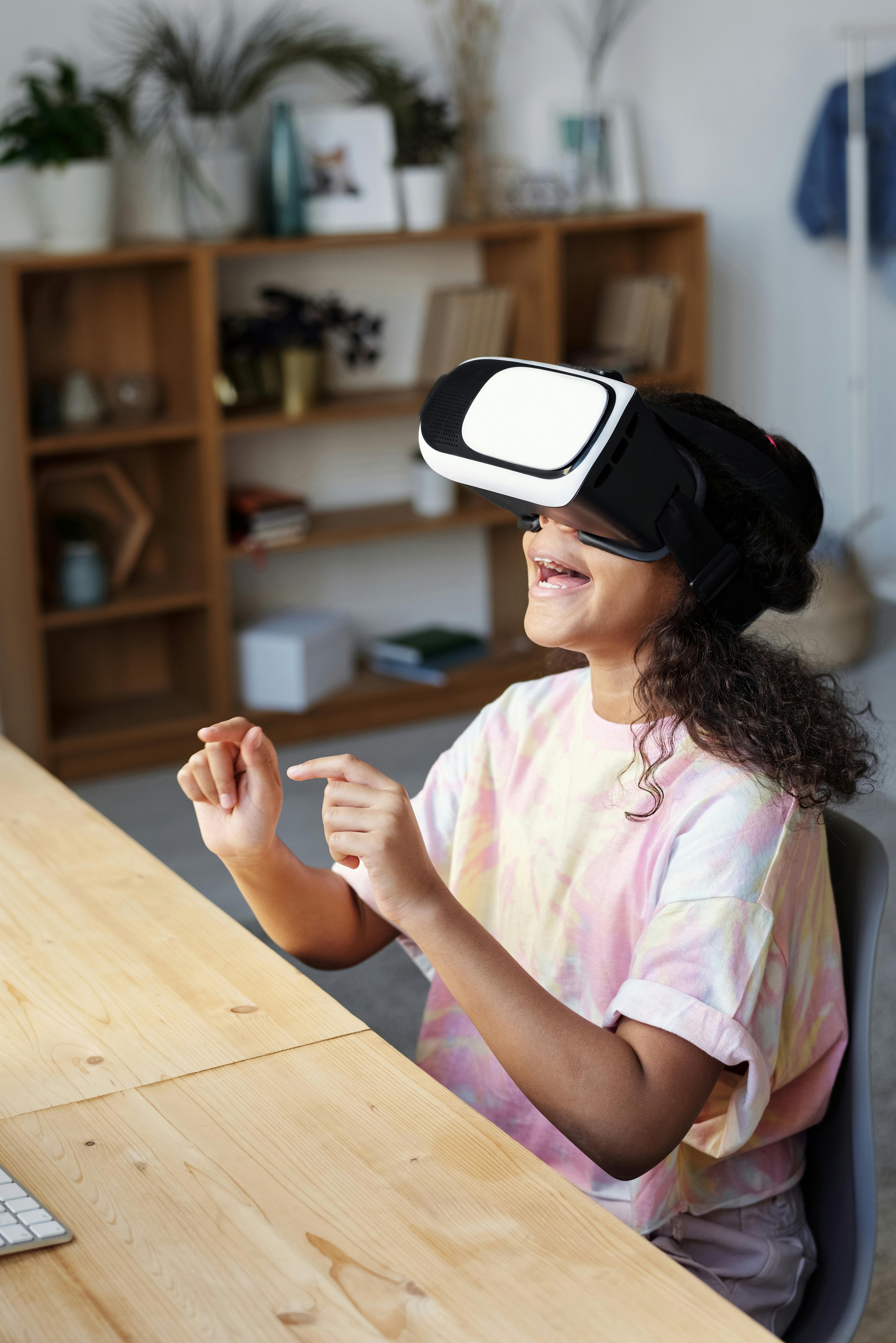
The emergence and potential of virtual and augmented reality in education
Virtual Reality (VR) and Augmented Reality (AR) are technologies that are revolutionizing the field of education. VR refers to a computer-generated simulation that immerses users in a virtual environment, while AR combines virtual elements with the real world
Introduction:
Virtual Reality (VR) and Augmented Reality (AR) have emerged as powerful technologies with the potential to revolutionize the field of education. The integration of these immersive technologies has opened up new possibilities for student learning, fostering engagement, understanding, and retention of knowledge. As technology advances, the combination of AI with VR and AR holds even greater promise, offering personalized and interactive learning experiences. This article explores the impact of VR and AR in education and how AI-driven learning can further enhance student learning and professional development.
[1]. Potential:
These technologies have the potential to enhance student learning by providing immersive and interactive experiences
[2]. Exploration:
Students can explore virtual worlds, manipulate objects, and engage in simulations that bring learning to life
[3].Level of engagement and interactivity:
This level of engagement and interactivity can greatly benefit students, including those with cognitive and learning disabilities
[4].Creating sense of presence:
By creating a sense of presence and allowing students to interact with virtual objects and environments, VR and AR can significantly enhance the learning experience
[5].Integration of VR and AR:
The integration of VR and AR in different subjects and fields opens up new possibilities for student learning. In the field of art education, for example, the introduction of VR and AI technology has been shown to significantly improve student learning outcomes
[6].Sense of experience:
VR technology elevates the sense of experience in fine art, improving students' interest and engagement in the subject [6]. Similarly, in other subjects such as science, history, and geography, VR and AR can provide students with immersive learning experiences that enhance their understanding and retention of the material
These technologies allow students to visualize complex concepts, explore historical events, and engage in virtual field trips, making the learning process more active, effective, and meaningful
[7].The use of VR and AR in education:
It has been widely recognized for its potential to transform the learning experience. By creating immersive and interactive environments, these technologies can enhance student engagement, motivation, and understanding of the subject matter
[8]. Providing learning solutions:
Additionally, VR and AR can provide individualized learning solutions, catering to the unique needs and learning styles of each student
[9]. Advancing of technology:
As technology continues to advance, the integration of AI with VR and AR in education holds even greater promise. AI can personalize the learning experience, adapt to individual student needs, and provide real-time feedback and support
[10].Combination of VR,AR and AI:
The combination of VR, AR, and AI has the potential to revolutionize education by providing students with personalized, immersive, and interactive learning experiences.
The Emergence of Virtual and Augmented Reality in Education
VR and AR technologies have seen significant growth in recent years, with numerous applications across various industries, including education. VR provides a fully simulated, computer-generated environment that immerses users, while AR overlays digital elements onto the real world. These technologies offer a unique opportunity to transform traditional learning approaches by creating interactive and experiential environments [1].
Benefits of VR and AR in Student Learning
The integration of VR and AR in education has been shown to offer various benefits for student learning. Firstly, these technologies enhance engagement and motivation by making learning more interactive and enjoyable. Students can explore virtual worlds, manipulate objects, and participate in simulations that mimic real-life scenarios [2]. This hands-on approach not only captures students' attention but also improves information retention and understanding.
Secondly, VR and AR enable personalized learning experiences. By adapting content and difficulty levels to individual students' needs, these technologies cater to diverse learning styles and abilities [3]. This personalization ensures that students receive tailored support, maximizing their potential for academic success.
Furthermore, VR and AR can foster inclusivity in the classroom. Students with cognitive and learning disabilities can benefit significantly from immersive learning experiences, as these technologies allow them to engage with the material in ways that may not be possible through traditional methods [4]. For instance, students with visual impairments can use AR overlays to interact with tactile objects, enabling a more accessible learning experience.
The Impact of VR and AI on Professional Development
The impact of VR and AR extends beyond student learning, reaching into the realm of professional development. Industries that require specialized training, such as healthcare and aviation, can leverage these technologies to create realistic simulations for skill development [5]. VR-based training can improve professionals' performance and decision-making in high-pressure situations, reducing the risk of errors and enhancing safety.
Furthermore, AI integration with VR and AR offers advanced analytics and feedback mechanisms, providing professionals with valuable insights into their performance. AI algorithms can track user interactions and behaviors within virtual environments, identifying areas for improvement and providing personalized coaching [6]. This feedback loop enhances the learning process and ensures continuous professional growth.
Challenges and Considerations
While VR, AR, and AI hold immense potential for education and professional development, several challenges must be addressed for their widespread adoption. Cost is a significant factor, as implementing these technologies requires investments in hardware, software, and training. Additionally, ensuring data privacy and security is crucial, especially when AI algorithms collect and process sensitive user information.
Educators must also receive proper training to effectively integrate VR, AR, and AI into the curriculum. Professional development opportunities should be made available to help teachers understand the full potential of these technologies and develop innovative pedagogical approaches.
Moreover, the digital divide must be considered, as not all students and professionals have equal access to the necessary technology and internet connectivity. To ensure equitable learning opportunities, governments and institutions should work towards bridging this divide and promoting digital inclusion.
Conclusion
In conclusion, the integration of virtual and augmented reality in education has already shown promising results in enhancing student learning experiences. By providing immersive, interactive, and personalized content, VR and AR technologies engage students and foster better understanding and retention of knowledge. When combined with AI, these technologies can offer even more profound benefits, providing adaptive learning experiences and valuable insights for educators and professionals alike.
While challenges remain, such as cost, data privacy, and digital inclusivity, the potential of VR, AR, and AI to transform education and professional development is undeniable. As technology continues to evolve, it is essential for educators, policymakers, and stakeholders to collaborate in creating a future where these transformative technologies are accessible to all, empowering learners and professionals for success in the digital age.
1. Analyzing augmented reality (AR) and virtual reality (VR) .... (n.d.) Retrieved July 21, 2023, from www.sciencedirect.com/science/article/pii/S25902911230013772. Augmented Reality in Education & Training: Use Cases .... (n.d.) Retrieved July 21, 2023, from www.fingent.com
3. The Promise of Immersive Learning: Augmented and .... (n.d.) Retrieved July 21, 2023, from itif.org
4. The Effect of Augmented Reality on Students' Learning .... (n.d.) Retrieved July 21, 2023, from www.mdpi.com/2078-2489/11/4/209
5. Research on the Influence of AI and VR Technology for .... (n.d.) Retrieved July 21, 2023, from www.frontiersin.org/articles/10.3389/fpsyg.2022.767689/full
6. Research on the Influence of AI and VR Technology for .... (n.d.) Retrieved July 21, 2023, from www.ncbi.nlm.nih.gov/pmc/articles/PMC8987582/
7. (PDF) Augmented Reality (AR) and Virtual Reality (VR) .... (n.d.) Retrieved July 21, 2023, from www.researchgate.net
